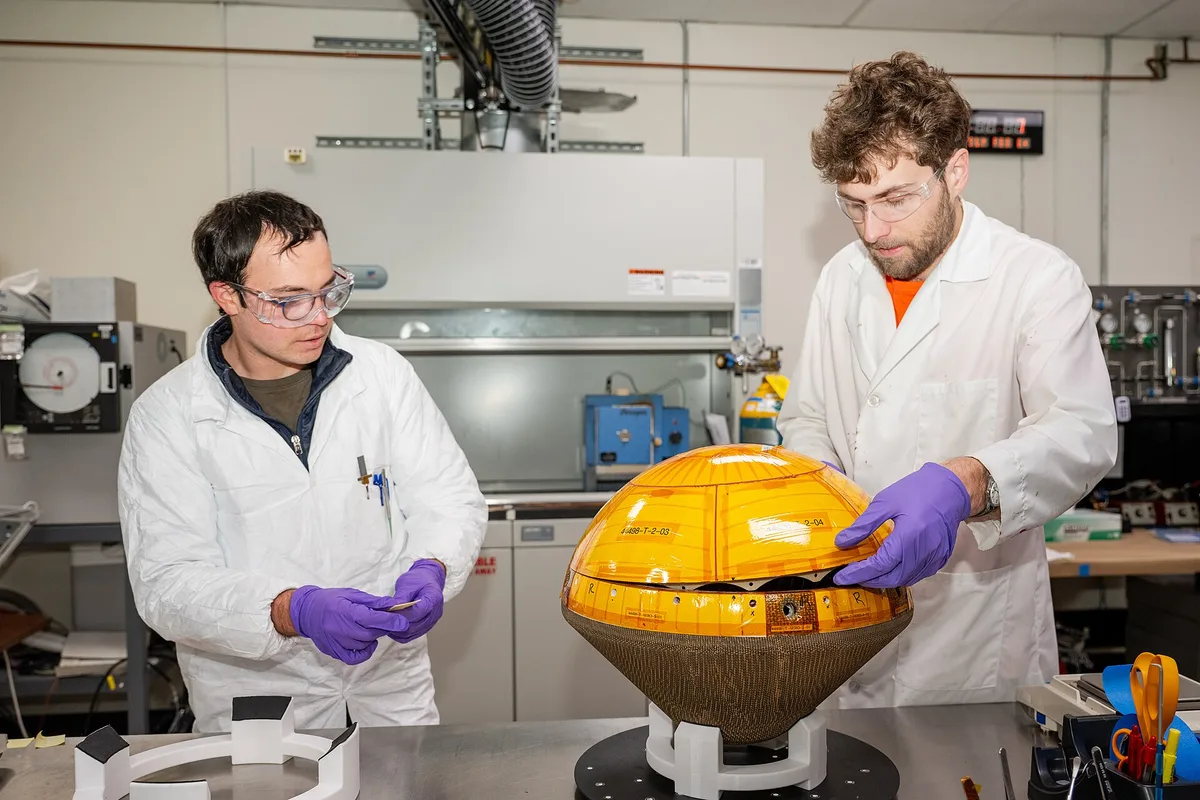
The Air Force Research Laboratory has two new projects in development: an autonomous, AI-powered shotgun designed as a last-ditch defense against drones, and a blood recirculation machine that pumps blood back into a patient instead of soaking it up from a wound. Both appeared in a September 28, 2026 Defense News video report, and both are described only as projects in development — not fielded systems, not finished devices.
That hedge matters. The available reporting is a video roundup, and it names the projects without publishing specifications, test results, or timelines. What a reader can responsibly take from it is narrower than the headline suggests: airmen at AFRL have designed an AI-driven shotgun for drone defense, and the lab is developing a device that returns blood to the body rather than absorbing it. Everything beyond that — how well either works, when it might deploy, what it costs — is not in the record.
This is a common shape for defense-technology coverage, and it rewards a particular reading habit. When a lab announces work in development, the honest question is not "does it work?" but "what would evidence that it works look like?" The answer here is not yet available, which is exactly why the pieces below stick close to what the sources say.
What is actually being reported about the autonomous shotgun?
Two things. First, the project exists: Defense News describes "a pair of new projects in development from the AFRL," and a companion headline says airmen designed an AI-powered shotgun for last-ditch drone defense. Second, the intended role is narrow — a last-ditch measure against drones, not a primary air-defense system. The word "last-ditch" is doing real work in that phrasing, and it comes from the outlet's own framing, not from this analysis.
What the report does not supply is any performance claim: no hit rate, no range, no description of how the autonomy works or what it targets. An autonomous weapon of any kind raises questions that only documentation can answer — what the system is allowed to engage, who authorizes it, and how it is tested. None of that is public in the available reporting, so none of it can be assessed here. Readers who want to judge the project should wait for those details rather than for stronger adjectives.
What does the blood recirculation device claim to do?
The stated idea is straightforward: instead of soaking up blood from a wound, the device pumps it back into the patient. Defense News frames this as lifesaving technology, and the logic is intuitive — blood that stays in the body is blood the body does not have to replace. But the reporting is one sentence deep. There is no description of the mechanism, no trial data, no statement of which injuries or settings it is intended for, and no regulatory status.
That gap is worth naming plainly. Medical devices in development routinely fail between the bench and the field, and a concept described in a video is not a validated therapy. For readers tracking how early-stage health technology gets reported, the useful skill is noticing what is missing — sample sizes, endpoints, review status. Our guides to reading a research paper without a PhD and to why sample size matters in medical research cover that skill in detail. Until the AFRL device has published testing behind it, the fair description is: a promising concept, in development, unproven in public.
Why does one video carry so little detail?
Because the underlying publication is a video roundup, not an investigation. The Defense News piece and its syndicated versions on Air Force Times and Federal Times share the same two-sentence summary: "a pair of new projects in development from the AFRL: an autonomous shotgun for drone defense, and a blood recirculation machine." Syndication is not independent corroboration — it is the same reporting appearing in three places. The evidence base here is one reporting origin, and this article is sized accordingly.
This is also how military lab publicity usually works. Labs showcase concepts to audiences that include appropriators and program managers, and coverage follows the showcase. Understanding how such work gets funded and prioritized is its own subject; our explainer on how funding agencies decide which research gets money walks through the incentives. The showcase-to-coverage pipeline is not a flaw, but it is a filter: it selects for projects that photograph well.
What would make these projects worth taking seriously?
For the shotgun: published test parameters, a stated authorization chain, and an independent description of the autonomy's limits. For the blood device: any peer-reviewed or trial documentation showing it works in the intended setting, with the study design and sample visible. Neither exists in the current record. Until then, both belong on a watch list rather than in a column of achievements — the same discipline applied to how a finding earns the label reproducible in civilian science.
What the evidence does establish is direction. A service research lab is investing in two unglamorous problems — cheap drone defense and battlefield blood loss — and is publicizing both. That is a real signal about priorities. It is not yet a signal about results.
What should a reader watch next?
Watch for the same two projects to reappear with numbers attached: a contract award, a test announcement, or a published evaluation. When they do, the details to check first are the ones missing now — performance data, testing conditions, and who ran the evaluation. Coverage that arrives with those details can be weighed; coverage that arrives without them should be filed, dated, and waited on. For more on that habit of reading, the research section collects our explainers on evaluating claims before they harden into facts.