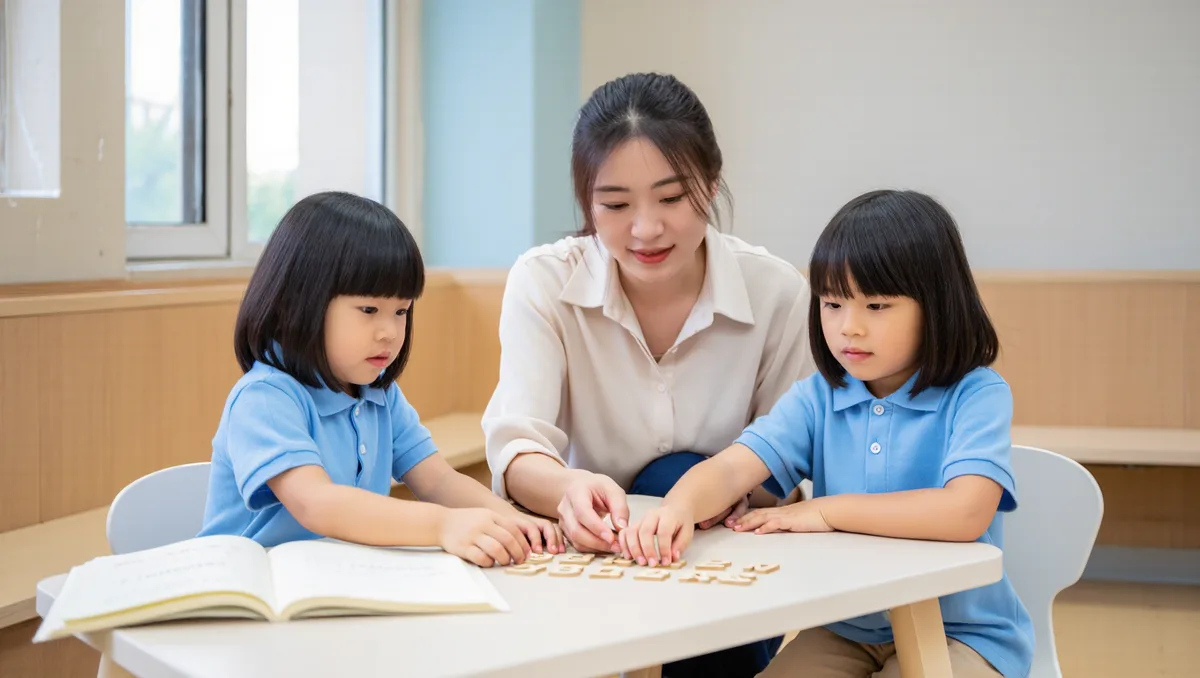
The importance of reading aloud rests on an unusually practical evidence base: clinic programs that hand families books and track what happens next. A 2023 review in Academic Pediatrics credits Reach Out and Read with more reading at home and better child language outcomes. The tool may be ancient, but the trials behind it keep arriving.
The program’s reach is large. The review, led by Nila Uthirasamy, reports that Reach Out and Read serves over four million children across the United States each year, about half of them from low-income families. The magazine’s literacy explainers keep coming back to the habit at the center of that program. The claim is testable, and the records exist.
One reviewed trial puts a number on the habit: families in the program read 4.3 days a week against 3.8 for families outside it. Small gaps compound across a childhood, much the way a confidence interval tells a reader how far an estimate can stretch. The rest of this piece follows the evidence behind the habit.
What is Reach Out and Read?
Clinicians hand families of children aged 0 to 5 a book at checkups, coach parents on shared reading, and model it in the office. That description comes from a 2026 randomized trial in Pediatrics led by Manuel Jimenez. The 2023 review counts 71 published papers on how the program runs, 43 of them research articles, and finds wide variation in what clinics actually deliver.
What did the 2026 trial find?
The trial followed 630 Latino caregiver-infant pairs, with babies aged 6 to 12 months at enrollment. Caregivers were mostly Spanish-speaking, with 88 percent reporting they spoke English less than very well. Families already in the book program were split into two extra arms: one got text-message reminders, and one got texts plus referrals to community services. At 18 months, the text group’s children scored higher on language measures, a gain the authors report as an effect size of 0.391. We covered a connected angle in Peer review may catch less bad science than readers assume.
The referral arm lifted social-emotional scores instead, at both the 9-month and 18-month checkpoints, with effects the authors size near 0.3 standard deviations. That split is a hint that how support arrives shapes what it does, and that clinics cannot carry the whole load alone.
How do researchers know reading itself helps?
Program comparisons are one line of evidence; trials inside the program are the sharper one. The 2023 review quotes a trial of 150 toddlers in which vocabulary scores ran higher for children aged 18 to 25 months in the program, with no significant difference in younger ones, so the effect has an age window. The 2026 trial checked language and behavior at 9 and 18 months after enrollment, on tests validated in English and Spanish. Attribution still needs care: families who join book programs differ from families who do not, which is why the randomized design matters. No trial tests bare reading aloud in isolation, only programs built around it.
Where does the evidence stop?
The 2023 review flags real gaps: sites deliver the program differently, and many research articles never assessed implementation at all. Much of the record rests on parent surveys, which can bend toward polite answers. The 2026 trial shows texts adding to the program’s effect, but the program’s own share of the gain is hard to isolate. The review’s authors call for work that moves past comparing exposed and unexposed groups toward testing how delivery drives results.
Conclusion
Reading aloud survives every new medium because it bundles what children need: words, attention, and a familiar voice. The clinical record from 2023 and 2026 supports the habit, measured in days read per week and fraction-of-a-standard-deviation language gains. The oldest tool in literacy is now one of the most handed-out, prescribed at checkups for four million children a year. Its simplicity is the point, and the trials are watching it anyway.