Solid-state batteries need three things before they reach mass-market cars: a solid electrolyte that carries ions as well as liquid does, interfaces that stay in contact over thousands of charge cycles, and factories that can make the cells cheaply. Prototypes work — several companies shipped small test cells in 2024 and 2025 — but announced production timelines cluster in the late 2020s, and the physics problems are unsolved in full.
In a conventional lithium-ion cell, lithium ions shuttle between two electrodes through a liquid electrolyte. The liquid soaks everywhere, touches everything, and conducts well — but it is flammable, and it limits how much energy a cell can safely hold. A solid electrolyte, in principle, removes the fire risk and permits a lithium-metal anode, which stores substantially more energy per weight than today's graphite.
What makes a solid electrolyte so tempting?
Energy density is the headline draw. Because a solid electrolyte should resist dendrites — needle-like lithium growths that pierce separators and short-circuit cells — designers can use a pure lithium-metal anode, roughly doubling the energy of the graphite used today. For an electric car, that translates into more range from the same battery weight, or the same range from a lighter pack.
Safety is the second draw. Fires in lithium-ion cars are rare, but when liquid electrolyte ignites, fires are fierce and hard to extinguish. Solid electrolytes — ceramics, sulfide glasses, polymers — do not burn the way carbonate liquids do. The U.S. Department of Energy has funded solid-state research for decades through its agencies and laboratories precisely for this combination.
Why do dendrites keep causing trouble?
Here the physics gets stubborn. Lithium ions moving through a solid must deposit as metal on the anode surface, and the deposition is rarely uniform. Microscopic irregularities concentrate the electric field, attracting more lithium to the same spot — a runaway process that grows a dendrite through the electrolyte like a root cracking pavement. A 2021 study in Nature led by Oxford University researchers traced dendrite initiation to tiny mechanical flaws and voids in the ceramic, showing that even millimeter-scale solid electrolytes can be breached.
Laboratories have partial answers: applying stack pressure to keep layers compressed, doping the electrolyte, engineering interlayers. Each fix adds cost, weight, or complexity, and each must survive a decade of vibration and temperature swings in a moving car.
What is the interface problem?
Solids do not conform the way liquids do. A liquid electrolyte wets every microscopic bump of an electrode; a solid touches only where the two surfaces actually meet. As batteries charge and discharge, electrodes swell and shrink by several percent, and contact spots open and close. Resistance rises where contact is lost — a bit like a handshake that keeps slipping. Chemical reactions at the boundary layers add to it, forming crusts that block ions. Cell designers spend much of their effort on thin buffer layers whose compositions are treated as trade secrets.
How do we know how far the technology has really got?
Companies publish performance figures for prototype cells, and independent reviewers at national laboratories test some of them. QuantumScape, a U.S. company backed by Volkswagen, said in late 2024 that it had begun shipping low-volume prototype cells to automotive customers for testing. Toyota, which holds one of the largest solid-state patent portfolios, has publicly targeted commercialization around 2027 or later. Samsung SDI, Samsung's battery arm, announced prototype lines aimed at similar dates in its statements since 2023.
The honest caveats: prototype cells are not vehicles. Published cycle-life data for lithium-metal solid cells have improved but still trail the ten-plus-year durability that carmakers demand, and no independent study has yet verified large-format cells produced at scale. The historical record also counsels patience — solid-state timelines have slipped repeatedly since announcements in the late 2010s.
Can these cells actually be manufactured?
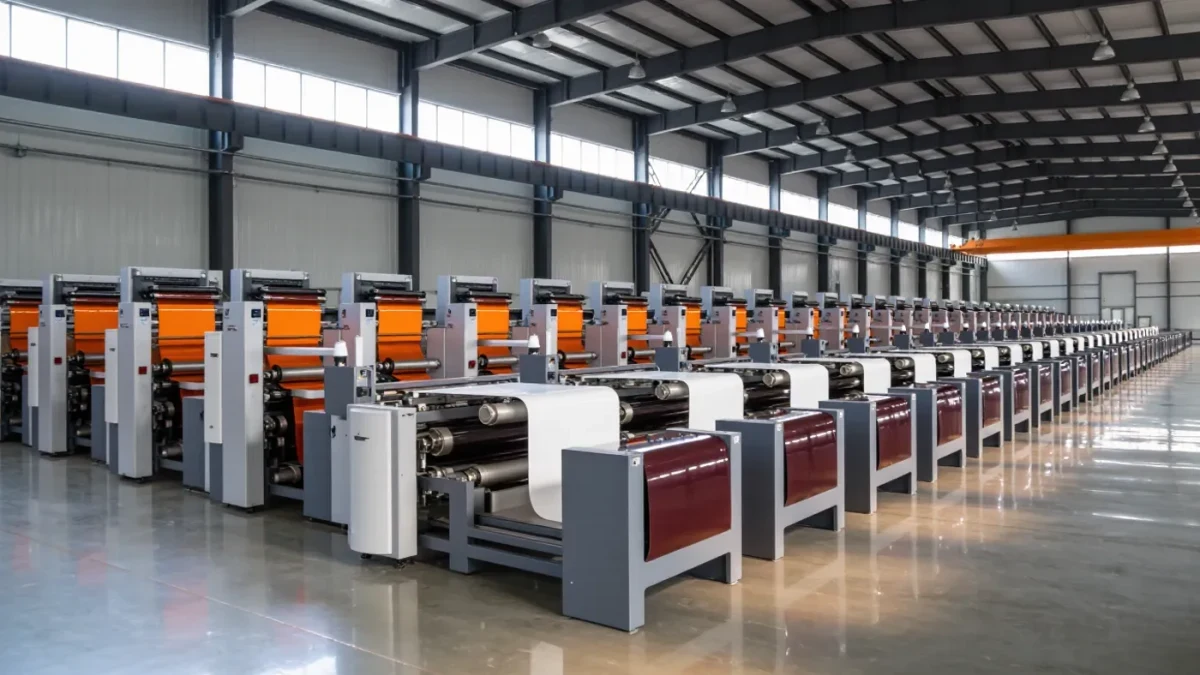
Ceramics are brittle; car batteries are made on roll-to-roll machines that bend, press, and laminate. Sulfide electrolytes — the leading class — react with moist air, requiring dry rooms stricter than today's gigafactories use. Stacking thin solid layers without cracks, at conveyor speed, with yields above ninety percent, is a manufacturing problem no company claims fully solved. Cost estimates from the U.S. Department of Energy's research programs suggest early solid cells will cost more per kilowatt-hour than mature lithium-ion until volumes rise substantially.
| Challenge | Physical cause | Current answer |
|---|---|---|
| Dendrites | Uneven lithium deposition | Stack pressure, interlayers |
| Interfaces | Loss of contact as electrodes swell | Buffer layers, cell design |
| Manufacturing | Brittle ceramics, air-sensitive sulfides | New processes, dry rooms |
| Cost | Low volumes, new materials | Scale, learning curve |
Are there alternatives that arrive sooner?
Partly, and carmakers are hedging accordingly. Semi-solid cells — conventional chemistry with some solid or gel components — have shipped in small numbers of Chinese electric vehicles since 2023, though independent analysts note the performance gains over advanced liquid cells are modest. Meanwhile conventional lithium-ion keeps improving: silicon-blended graphite anodes, denser cathodes, and cell-to-pack structural designs have raised range measurably each year, raising the bar that solid-state must clear to justify switching factories over. A new technology does not compete with lithium-ion as it was in 2015; it competes with whatever the incumbents ship in 2028.
When will drivers actually see them?
The most defensible answer as of early 2026: premium vehicles first, in small numbers, later this decade — if pilot lines meet their announced schedules. Widespread, affordable solid-state cars are a 2030s prospect. The underlying science is genuinely promising; the distance between a promising cell and a million dependable cars is the whole story.