
Literacy
What a confidence interval tells a reader
The range around a study's headline number — not the number itself — shows how much the result could plausibly move.
By Bianca Torres • April 27, 2026
Literacy teaches the skills for evaluating evidence directly: distinguishing correlation from cause, reading confidence intervals, converting relative risk into absolute terms, spotting undeclared conflicts, and recognizing when a sample is too small. Examples come from real published papers. For anyone wanting to check a health claim independently.
Literacy teaches the skills for evaluating evidence directly: distinguishing correlation from cause, reading confidence intervals, converting relative risk into absolute terms, spotting undeclared conflicts, and recognizing when a sample is too small. Examples come from real published papers. For anyone wanting to check a health claim independently.
The range around a study's headline number — not the number itself — shows how much the result could plausibly move.

The same finding can be reported as a 50 percent increase or as a few extra cases per thousand — both true, only one honest without the other.

A single vivid story carries a hidden sample of one — and often a sample that survived a filter the listener never sees.
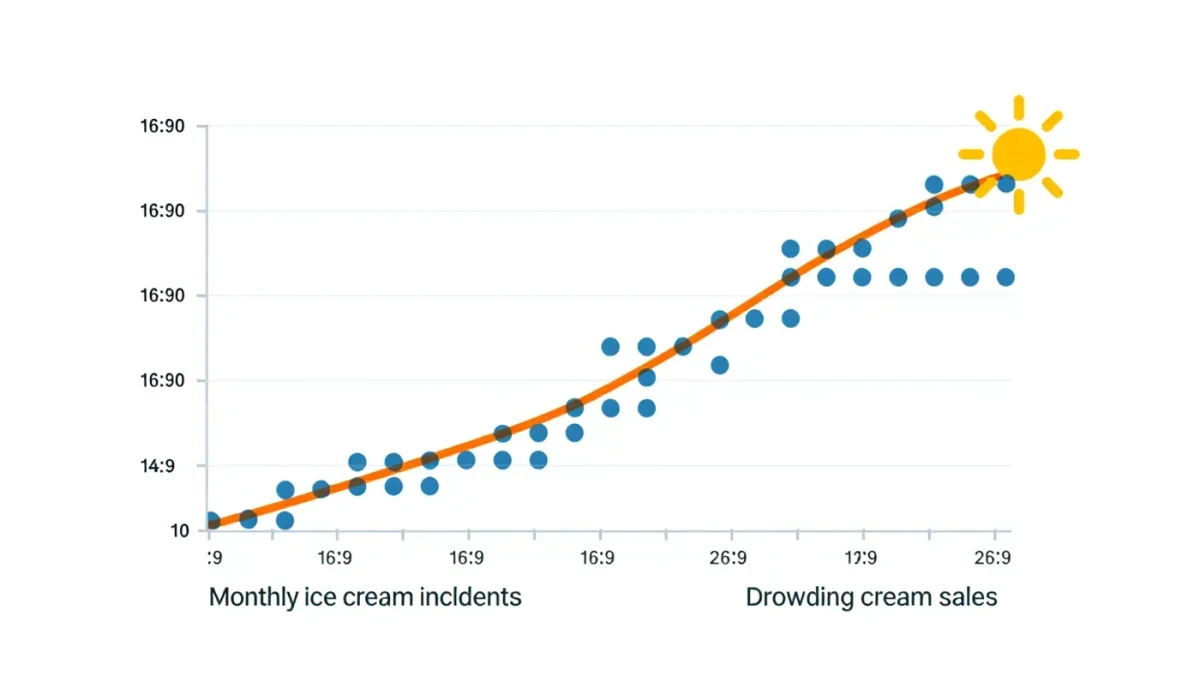
Headlines turn associations into causes because causes read better — three habits of mind restore the distinction.

A three-pass strategy — abstract, figures, limitations — extracts most of a paper's value before the methods section slows a reader down.